Blog Archives
The Forensic Veterinary Examination
Perhaps one of the most unique aspects of my job as a shelter veterinarian at a large municipal shelter is that I get to be involved in veterinary forensics.
For those of you who have seen shows such as Animal Cops or CSI, you may have an idea of what this entails. Essentially, I work with animal service officers to investigate and prosecute cases such as animal abuse and neglect by performing examinations on the animals that are the focus of the investigation to determine whether my examination supports or fails to support the case.
Some of the interesting cases I’ve seen so far include:
- Dogs allegedly killed by other dogs
- Dogs that were allegedly abused.
- Dogs that were allegedly neglected, such as owners allegedly failed to provide the dogs with medical care after a substantial injury or attack.
- Dogs that were allegedly sodomized.
- Dogs that died from unknown causes and were found on a crime scene that was part of a police investigation.
Before & After – Struggling with Paraphimosis
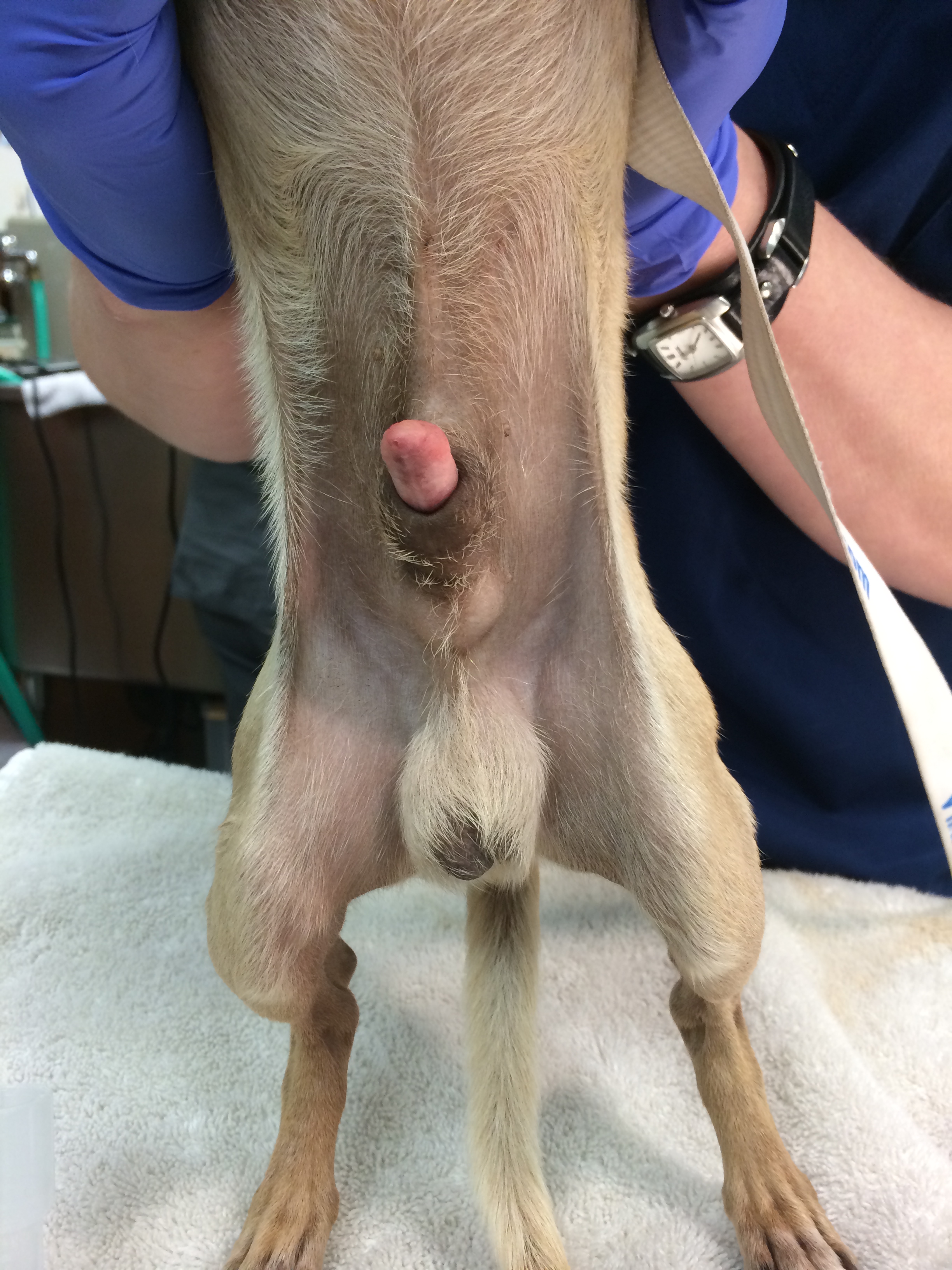
Paraphimosis Before Phallopexy
It’s an awkward problem. It’s also often misunderstood. Many people see a dog with paraphimosis (par′ă-fī-mō′sis) and think the dog is sexually aroused. While any male dog may normally (even without sexual arousal) extend his penis beyond the sheath or prepuce that normally covers his penis, the penis should be able to retract back within the prepuce and out of sight without any difficulty. When that doesn’t happen, we have a problem. Paraphimosis is the term we use when a dog’s penis is unable to fully retract back within the prepuce. The first paraphimosis case I cared for was a chihuahua. His penis was stuck outside of the prepuce, but fortunately it simply appeared dry. Some dogs with paraphimosis may develop swelling, strangulation of the tissue, infection or necrosis. This dog was lucky. Read the rest of this entry
Before & After – Vinnie’s Puppy Strangles Didn’t Stop Him From Finding a Forever Home
One of the things I love about shelter medicine is the ability of a shelter and its staff to take an animal that would easily be overlooked or considered for euthanasia and give them a chance to heal and get a second shot at life.
There are many animals that come into the shelter broken, malnourished or with various medical concerns that need to be addressed. Oftentimes we become so enveloped in caring for the animal that we forget to recognize how far the animal has come in its recovery. We often think back to the grainy image stored in our memory of the animal when it first arrived in our care but have no actual image to reflect back on to remind us and show others how much of a difference we made. That is why I am going to make a concerted effort to take photographs of animals early on in their treatment so that I can share with you the many success stories that we see in animal shelters.
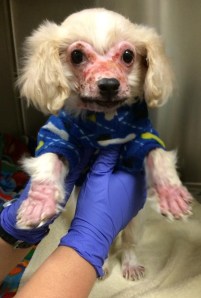
To start off the Before & After series, it is only appropriate that I share the story of Vinnie.


 Tails of a Shelter Vet